The Industrial Metaverse: alive and kicking
Discourse tends to focus on the ‘consumer’ Metaverse but in this piece we focus on the lesser known, but arguably more important, ‘industrial’ Metaverse.
Industry commentators have been quick to sound a death knell for the Metaverse over the past few months. The narrative is assisted by talk of a “Metaverse winter”, tech layoffs and whether artificial intelligence has "killed" it. However, whilst these commentators may be right to identify a temporary cooling of interest in the Consumer Metaverse space, the development of the Industrial Metaverse continues at pace.
What is the Industrial Metaverse?
As we have previously explained when we gave our definition of the Metaverse back in 2022, the Metaverse is not (currently, at least) a single virtual environment. Rather, it consists of numerous, distinct virtual 3D spaces, each with its own identity and purpose. The debates about the terminology to describe the Metaverse will continue but, at its core, it is the application of primarily 3D technologies (in combination with other underlying technologies) to various situations.
These virtual 3D spaces can largely be grouped into the following two categories (according to which sector of the economy they serve):
- Consumer Metaverse: Where the ultimate end users of the Metaverse are consumers and the focus is primarily on entertainment and leisure activities, such as shopping, gaming, VR and social media. Prominent examples in this area are Roblox, the Sandbox, Decentraland, and Fortnite.
- Business Metaverse: Where the ultimate end users of the Metaverse are businesses. Commentators have further separated the uses here as follows:
- Enterprise Metaverse: Where businesses adopt the Metaverse to optimise performance. The Enterprise Metaverse is used for various purposes including: (i) improving internal communication processes and training; (ii) enriching consumer experience, including gamification of experience for user engagement; and (iii) promoting, offering and selling products and services; and
- Industrial Metaverse: Where the Metaverse is used in industrial sectors to create a virtual interconnected network of real-life hardware, processes and systems with their digital replicas. Humans can collaborate virtually and interact with this network to design, build, operate and maintain industrial processes and enable real-time problem solving virtually.
Compared to the Consumer Metaverse, the development of the Industrial Metaverse is already relatively advanced. Digital twins (see our article) is a central building block of the Industrial Metaverse, and are already widely used in the industrial space. A digital twin is a digital replica of a physical asset, process or system. It uses historic and real-time data, such as from connected sensors, and applies AI and advanced analytics, to replicate real-world situations.
We see the Industrial Metaverse as the extension of digital twin technology at scale, incorporating enabling technologies which allow (i) more immersive human interaction with the simulation and (ii) interconnectivity between individual digital twins, allowing for larger-scale, macro-simulations. The Industrial Metaverse will unlock numerous benefits not previously realisable with digital twins alone: including efficiencies (and therefore cost savings), acceleration and improvement of processes, and increased sustainability.
Industrial Metaverse: enabling tech
Just like the Consumer Metaverse, the ideal of the Industrial Metaverse is borne out of a confluence of enabling technologies, all of which are on their own steep development trajectories. As the following technologies develop, they will complement and work alongside digital twin technology to facilitate the Industrial Metaverse.
- Internet of Things (IoT): IoT connectivity allows devices and components in the physical world to communicate with the virtual environment. IoT is a crucial feature that brings digital twins to life. By gathering vast amounts of live data and transferring from the physical into the digital world, IoTs enable digital twins to be used to monitor, analyse and control systems in real-time.
- Artificial Intelligence (AI): The integration of AI in virtual models allows pre-emptive risk spotting and predictions. By analysing data, AI can show how to fix and prevent problems and what action to take to achieve a desired outcome in industrial processes and designs. Generative AI could even be used to build digital twins autonomously with accuracy and efficiency.
- Extended Reality (including Augmented / Virtual / Mixed Reality): Extended Reality hardware (such as headsets, goggles etc.) allows users to experience and engage with the virtual models in ways that facilitate new and more productive forms of interaction and insight.
- Cellular Networks (5G/6G): Truly immersive Industrial Metaverse experiences will require high download speeds, low latency and large capacity in order to allow the various interconnected devices to communicate with the virtual model at the requisite level. In industrial settings, this will require 5G and possibly also 6G networks (often on a localised / enterprise basis).
- Cloud and Edge Computing: Similar to the points above about cellular networks, the amount of processing and data required to support the Industrial Metaverse means it will rely on the advancements in cloud and edge computing to support it by providing greater computing capacity.
- Distributed ledger technology / blockchain: A successful Industrial Metaverse requires secure, accurate and reliable data. Blockchain technology could provide encrypted infrastructure for the Industrial Metaverse, because of the transparency and traceability it offers, whilst also being decentralised and (for the most part) secure. Other promising use cases for distributed ledger technology in an industrial context include supply-chain monitoring, counterfeit detection, identity management, asset tracking, and quality assurance – all of which could be integrated into an Industrial Metaverse.
Industrial Metaverse: potential applications
As with any emerging technology, it is helpful to understand how the Industrial Metaverse might work in practice. When considering the ideal of the Industrial Metaverse, its applications might (like the Consumer Metaverse) seem potentially limitless. We have not, therefore, sought to list all of them in this article. However, the following applications seem to be within reach based on the current technology:
1. Product design and engineering: The Industrial Metaverse could be used by businesses to design, test and improve products virtually for as many times as desired before manufacturing them physically. For example, when developing the Mars Curiosity Rover, NASA partnered with Siemens to simulate the extreme atmosphere on Mars. They leveraged the technology to test the Rover hundreds of times before producing the prototype. Additionally, virtual collaboration tools available in the Industrial Metaverse allow stakeholders to collaborate on the design and testing processes from anywhere in the world.
2. Logistics / planning: Using the technologies in the Industrial Metaverse to supplement already sophisticated enterprise resource planning technology, businesses can map out their end-to-end supply chains with accuracy and transparency. This would provide businesses with more visibility into their operations, allowing them to identify areas for improvement and opportunities to allocate resources more effectively. At a larger scale, cities could use the Industrial Metaverse to simulate events and stress-test infrastructure in a virtual environment to allow them to plan for the distribution of resources.
3. Maintenance: Remote assisted maintenance is made possible with technologies such as digital twins and extended reality where experts can assist with a maintenance task virtually. The use of AI also enables predictive maintenance (i.e. identifying future failure points in a virtual model and then fixing them in the physical world before the failure occurs), which increases safety and prolongs the lifecycle of assets.
4. Training: The realistic and immersive representation of real-life operations can provide employees with hands-on training in test environments before going into in the field. For instance, the airline JetBlue offers VR training, which ensures safety and engagement of their technicians. It is easy to imagine that businesses might want to put their junior mechanics and engineers through VR training on complicated / expensive machinery before letting them loose on their physical world equivalents.
Challenges and risks
We have already identified what we consider to be the top six risks associated with digital twin technology in our previous article. Most, if not all of those risks apply equally to the Industrial Metaverse. We have, however, identified a number of risks and challenges which we see as having specific application to the Industrial Metaverse.
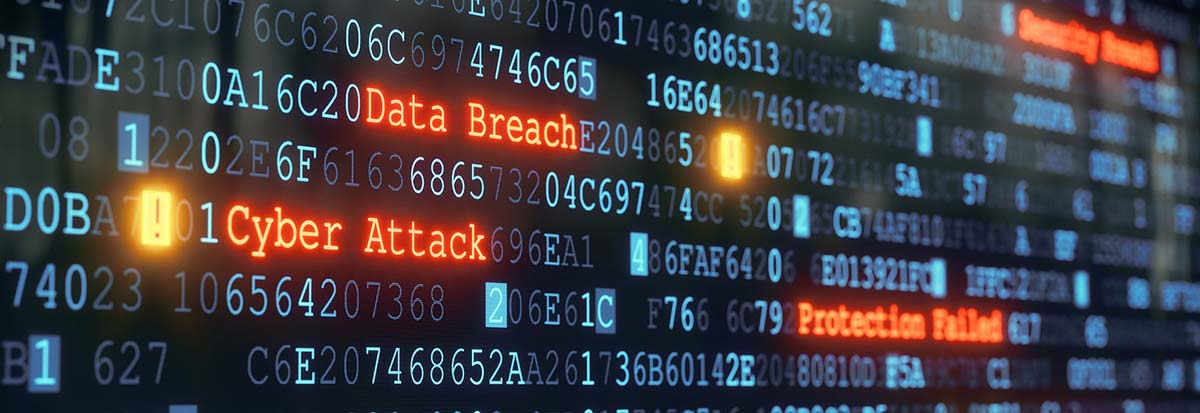
1. Cybersecurity: Having an Industrial Metaverse (rather than just a digital twin) implies an additional layer of connectivity – either within an internal network or with the internet. That presents a risk: Industrial Metaverses will often involve the use of large quantities of sensitive data, and will therefore be ripe targets for cyberattacks. Businesses will need to consider how they store and process data within the Industrial Metaverse, and ensure they have rigorous security protocols to prevent unauthorised access.
2. Interoperability: Today, digital twins are standalone simulations of separate components and systems. In order for the Industrial Metaverse to become a reality, however, it must accurately represent the real world, where systems are interconnected. Therefore, interoperability (i.e. the ability for distinct digital twins / systems to communicate and interact with each other) will be crucial to the development of the Industrial Metaverse. Efforts are already ongoing in this regard: the Institution of Engineering and Technology (with support from the UK Government) has pioneered the Apollo Protocol, a proposal for formalising communication and interoperability between sectors using digital twins.
3. Regulation: As the Industrial Metaverse proliferates, regulation will inevitably need to follow. The technology is arguably too nascent to identify where Government intervention might be needed – though it is likely that it will concern the enabling technologies identified above (e.g. IoT, AI) rather than Industrial Metaverse as a distinct technology. The Industrial Metaverse will need to adapt to take account of any regulation impacting these technologies, and correspondingly, efforts will need to be made to ensure that any regulation accommodates the vision of the Industrial Metaverse.
4. Disputes: We have previously written on the considerable risk of disputes arising from the Metaverse – both in the form of claims by users against platforms, and disputes between users. The scope for disputes is even greater in the Industrial Metaverse, where significantly more value is at stake, and where businesses are likely to pursue losses even more robustly to protect the interests of their shareholders.
Conclusions
As the enabling technologies underlying the Industrial Metaverse continue to develop at pace, the opportunities for businesses are potentially revolutionary (and lucrative). Particularly given the immunity of the Industrial Metaverse from the wax and wane of consumer demand, it seems almost certain that it will become more prevalent as businesses recognise the myriad ways that it can help optimise their operations.
It may seem trite to identify that where opportunities lie, so too do risks. However, the application of any novel technology to industrial processes must be carried out with extreme caution: the stakes will in many cases be much higher than in the Consumer Metaverse, where a few misappropriated NFTs can (or at least used to) constitute a serious loss. In the Industrial Metaverse, the scope for physical harm and damage is obviously and considerably greater, meriting a more careful approach.
Many of the risks identified can be mitigated with adequate contractual protection, and it is therefore vital that businesses investing in the Industrial Metaverse ensure that they are allocating the time and resources to negotiate the underlying agreements properly.
Our team of experts are already advising on these issues and would be happy to assist with any enquiries.
Our other gaming and immersive technology (GAIT) updates (including our GAITKeepers Podcast Series) are available here.



.jpg?crop=300,495&format=webply&auto=webp)



_11zon.jpg?crop=300,495&format=webply&auto=webp)



.jpg?crop=300,495&format=webply&auto=webp)




.jpg?crop=300,495&format=webply&auto=webp)