




21 October 2026Publication
FCA publishes good and poor practices for the use and deployment of AI
FCA expectations for AI in financial services, publishing observations on good and poor practices relating to firms’ use of AI.
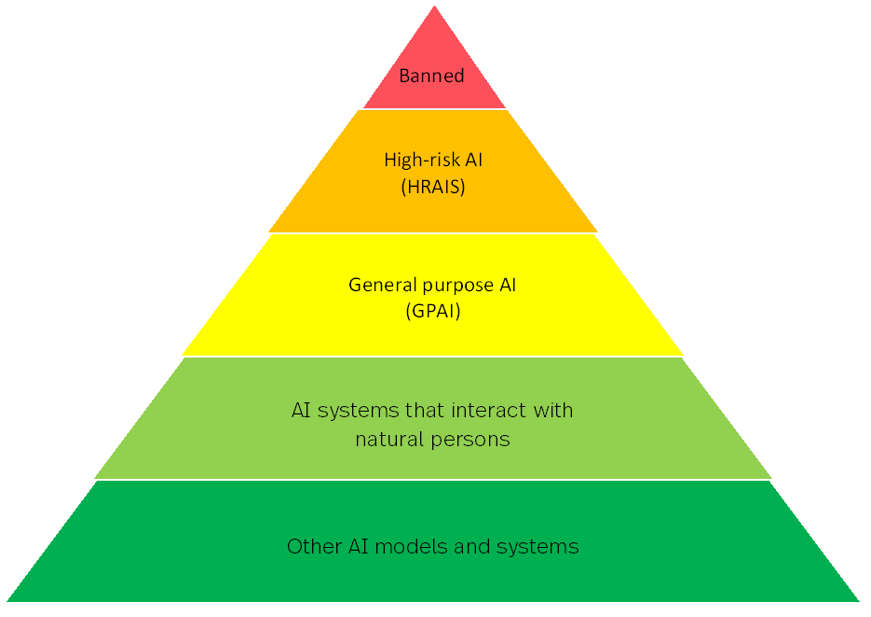
The EU AI Act is a comprehensive, sector-agnostic EU regulation which applies directly in Member States. The AIA’s approach is risk-based and distinguishes between prohibited AI systems, high-risk AI systems, general-purpose AI (GPAI) models with systemic risk, other GPAI models, and other AI systems that are low risk.
The AIA applies to the entire AI value chain, and sets out different requirements for providers, deployers, importers and distributors of AI systems. The AIA applies notwithstanding the location or establishment of the operator - most importantly, it applies to providers of AI systems or GPAI models marketed in the EU, and deployers of AI systems used in the EU or whose output is used in the EU.
Every organisation that uses or deals with AI in some way will need to consider the possible impact of the EU AI Act.
Here are quick links to our key EU AI Act resources (with more information below):
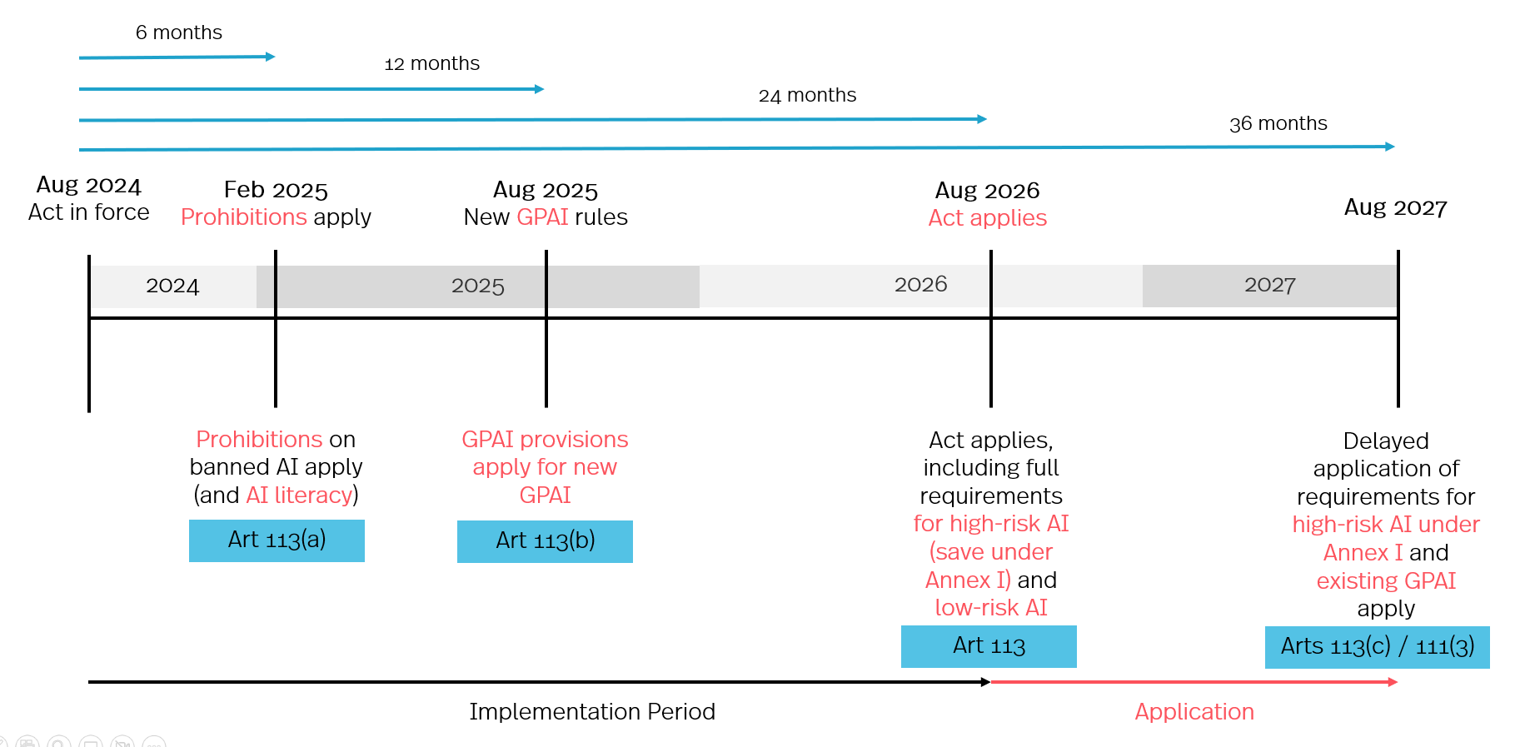
We have created a timeline setting out the critical dates associated with the implementation and application of the Act.
We have created downloadable versions of the full text of the EU AI Act, together with translations.
We have set out the key ways in which organisations should be thinking about compliance with the AI Act.
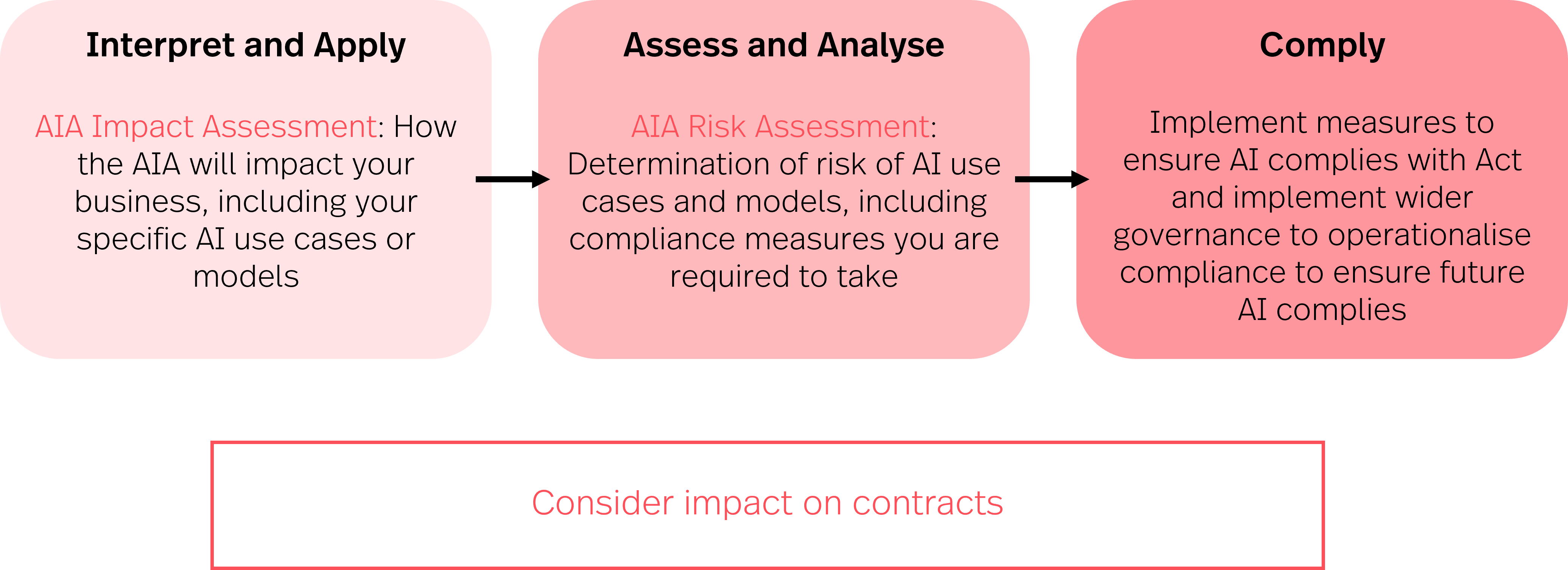
We have been advising on the EU AI Act since its inception in 2021. We advise the world’s biggest technology companies, financial institutions and healthcare companies on the Act. We have a deep understanding of the Act, including how key concepts are likely to be interpreted, how organisations should assess its impact and risk, and how the Act will be enforced.
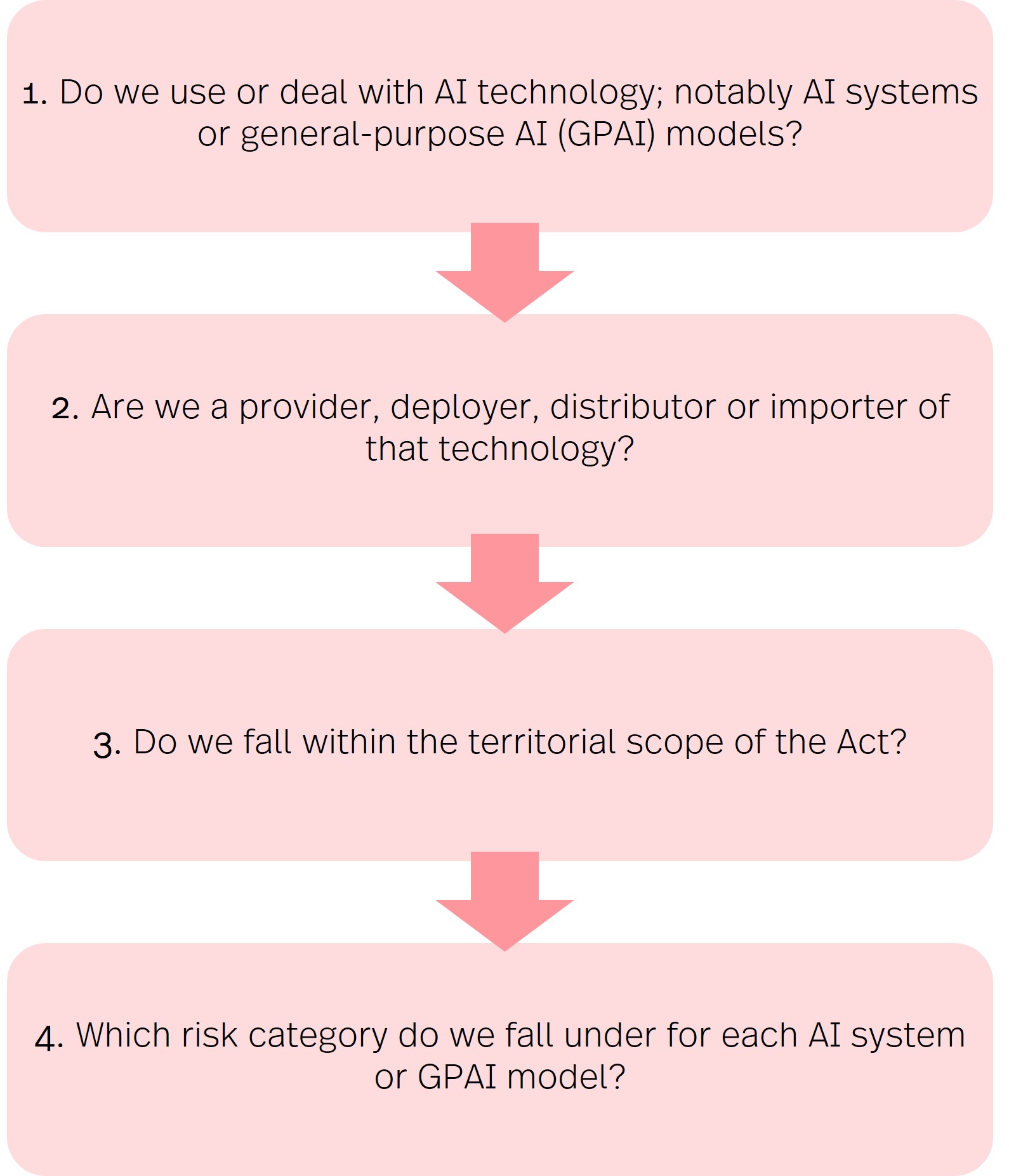
The key questions for organisations in determining the impact of the Act are:
We have helped clients with:
We regularly advise on how the Act applies and how it should be mapped to your organisation’s development or use of AI.
We have also created a set of clear, accessible guidance notes on the EU AI Act’s most complex concepts. Our comprehensive notes demystify concepts like “high-risk AI systems”, “general-purpose AI models”, "provider", and "placing on the market", providing practical examples and explanations for each. Our notes are designed to clarify how these concepts relate to one another - particularly as regards the AI value chain - so that organisations can understand which technologies and entities are affected by the Act.
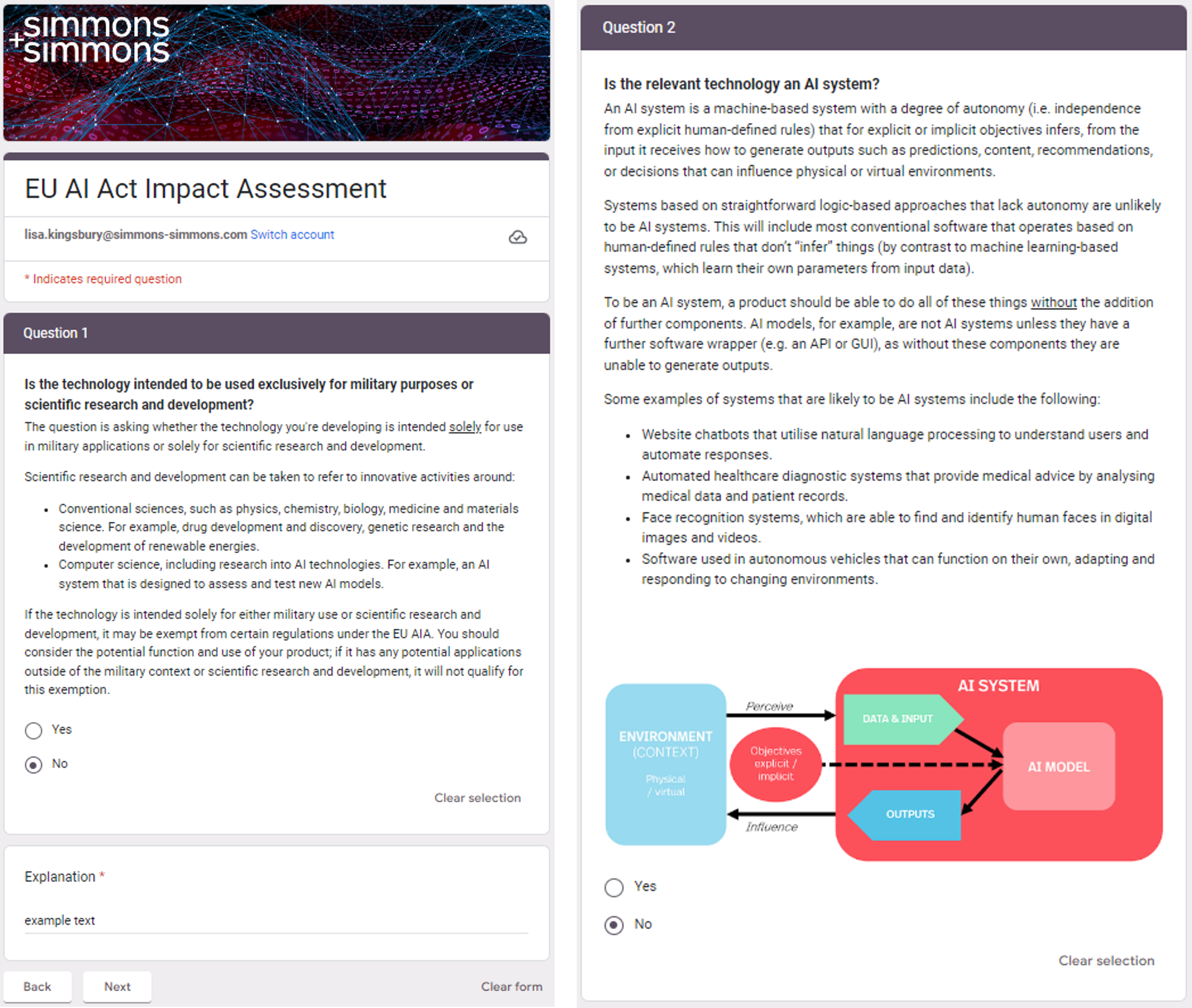
We have created intuitive regulatory impact assessments which can be used by (and tailored to) organisations internally. These impact assessments allow organisations to categorise their AI technologies under the EU AI Act, track applicable regulatory compliance measures, and escalate certain AI systems and models to Legal.
We are in the process of developing a compliance handbook, with guides, templates and protocols to assist organisations with implementing compliance measures.
We regularly advise on wider AI governance, including governance structures, AI principles, legal risk assessment frameworks and AI policies.
We have created our comprehensive EU AI Act flowchart to help you understand your obligations under the Act. For the best viewing experience, we recommend opening in full-screen mode by clicking the "..." icon and then selecting the screen symbol.
Alternatively, you can access the flowchart here.
This document (and any information accessed through links in this document) is provided for information purposes only and does not constitute legal advice. Professional legal advice should be obtained before taking or refraining from any action as a result of the contents of this document.
If you have any questions, contact a member of the EU AI Act team for assistance:
21 October 2026Publication
FCA expectations for AI in financial services, publishing observations on good and poor practices relating to firms’ use of AI.

21 October 2026 Publication
From changing regulation to AI in the workforce and to EU AI Act enforcement, gain the confidence to use AI and still explain and defend the decisions you make.

13 October 2026 Publication
Our fortnightly round-up of key AI legislative, regulatory and policy updates from around the world

30 September 2026 Publication
Fast-growing companies are using AI to scale at unprecedented speed. Governance can help turn that advantage into sustainable growth.
.jpg?width=380&width=380&format=webply&auto=webp "Article")
28 September 2026 Publication
Our fortnightly round-up of key AI legislative, regulatory and policy updates from around the world