The ocean is a crucial investment frontier, essential for all life on Earth.
Take a deep breath. Then another. You have breathed in the result of an interplay of plankton and marine plants photosynthesising beneath the waves since ancient times. More than half of the oxygen we breathe – every other inhale – was produced this way.
As Sandy Luk, CEO of the Marine Conservation Society, said during our Financing the Growth of the Blue Economy event in June, co-hosted with the charity: “The ocean is the foundation of life on Earth.”
But the ocean and the rich diversity of life within it are under serious threat. As the atmosphere becomes clogged with greenhouse gases (GHGs) and overheats, so too do the seas that cover 70 per cent of the planet’s surface – setting off a chain reaction that disrupts the ecosystems on which all life depends.
The transformative power of a sustainable ocean economy
What is needed to mitigate this threat also presents opportunities. If the ocean were a country, it would have the eighth-largest economy, coming in just after France. And the OECD expects employment in ocean-based industries to more than double by 2030, to around 40 million.
The blue economy – which includes energy, blue foods, shipping and port activity, tourism, and marine protection – is worth approximately $24trn, with an annual value of goods and services estimated at around $1.5trn, which is set to reach $3trn by 2030.
Making blue economic growth more sustainable promises huge rewards. Research commissioned by the High Level Panel for a Sustainable Ocean Economy in 2020 found at least $5 gained for every $1 invested in areas like offshore wind energy, decarbonising shipping, sustainable ocean food production, and conserving and restoring marine habitats like mangroves, seagrass and coral reefs.
“Investing in the ocean is the most important investment thesis of all time,” explained Chris Gorell Barnes, a founding partner of Ocean 14 Capital, at our blue economy event.
But investment in sustainable ocean development is severely lacking. Sustainable Development Goal (SDG) 14: Life Below Water is the least funded of the targets. The World Economic Forum points out that approximately $175bn per year is required to achieve SDG 14 by 2030, yet total investment between 2015 and 2019 amounted to just under $10bn.
Fortunately, a wave of recent regulation hopes to underpin sustainable blue growth, protect marine biodiversity and improve ocean health while opening up a number of novel investment opportunities that can benefit businesses, investors and countries alike.
The international policy seascape
“Governments are critical in setting the rules of the road,” says Suzanne Johnson, senior advisor at UN Global Compact, Oceans. “Governments can create stability, transparency and give some longer-term predictability through tools and levers that incentivise more sustainable business within the ocean.”
A suite of high-level policy agreements and evolving national, regional and international regulations recognise the value of ocean health and marine protection. The Global Biodiversity Framework, a historic agreement adopted at the 15th Conference of the Parties to the United Nations Convention on Biological Diversity (COP15), includes four goals and 23 action targets, with a central ambition of protecting 30 per cent of the planet’s land and seas by 2030.
“We have seen COP15 create real momentum,” explains Sonali Siriwardena, partner and our global head of ESG. “For example, since COP15, we’ve finally seen agreement on the text of the UN High Seas Treaty after 19 years of negotiations.”
Once adopted, the High Seas Treaty would set out a legal framework to manage and safeguard around two-thirds of our blue planet – areas that have historically been beyond national jurisdictions.
Other potentially revolutionary international agreements include the Global Plastics Treaty, which aims to put an end to plastic pollution, and the WTO Agreement on Fishing Subsidies, which would prohibit harmful fishing subsidies and help crack down on illegal and unreported fishing.
“High-level diplomacy has achieved a remarkable amount for the global commons in the last 18 months,” Johnson says. “These collective agreements have the potential to be game changers in addressing big problems within the global ocean but also in enabling private sector opportunity.”
Meanwhile, regional bodies and national governments are developing promising ocean-focused policies and blue economy strategies that will spark innovation in essential blue industries while easing friction for market participation.
For example, blue economy considerations are embedded into the EU’s Green Deal, and the bloc recently announced €106m in funding for 18 projects in its mission to ‘Restore our Ocean and Waters’. The EU Taxonomy, while not explicitly focused on the ocean, creates a framework for investors to understand which economic activities are environmentally sustainable, including criteria on the sustainable use and protection of water and marine resources.
Some governments use complementary policy instruments to spur blue economic development. The UK’s proposed Energy Security Bill, for example, aims to reduce offshore wind consenting time from up to four years to one year.
Creating a common language for investors
With the policy architecture creating momentum, work is now under way to give businesses and investors the frameworks they need to define the problem and invest accordingly. “The appetite and excitement from the investment community is already there, so what we need is that common language,” says Elliot Beard, partner in our Financial Markets group.
This, too, is beginning to emerge. For example, the Ocean Stewardship Coalition, part of the UN Global Compact, has developed key recommendations for businesses and governments to develop ocean-based climate solutions.
The Task Force for Climate-related Financial Disclosures (TCFD) already offers guidance for investors and businesses to understand corporate climate risk and create robust net-zero strategies. Its sister body, the Taskforce on Nature-Related Financial Disclosures (TNFD), is developing a similar framework to help businesses and investors "identify, assess, respond and, where appropriate, disclose” their nature-related dependencies, impacts, opportunities and risks.
Businesses and investors are taking note, says Siriwardena. “We see clients proactively engaging with the concept of biodiversity and nature impacts, particularly those that seek to be ambitious in their ESG strategies.”
“There's no clear view of how you price nature yet, but the market is beginning to explore innovative ways to do so. It may well take some time to coalesce around singular targets like we have for climate, but the most important thing is that the conversation has begun.”
Investment in the sustainable blue economy
This enthusiasm can be seen in the recent growth of blue economy deals. Between 2018 and 2022, the number of financial transactions in the EU linked to the ocean increased by 200 per cent, with investors using debt instruments, equity and other financial innovations to fund the sustainable blue economy.
Blue bonds are already used to fund multi-million-dollar ocean conservation and blue economy projects. Despite representing just 0.5 per cent of the sustainable debt market, blue bonds are increasingly popular among issuers and investors because they guarantee performance against key performance indicators on the sustainable blue economy. In May, Indonesia issued the world's first publicly offered sovereign blue bond through the Japanese debt capital market, raising $150m to invest in its blue economy.
Many blue bonds – including the very first, issued by the Seychelles in 2018 – guarantee investment in marine protected areas (MPAs), which provide legal environmental protection to ocean habitats. But not all MPAs are created equal, explains Will Oulton, non-executive director at the Marine Conservation Society. “Many island nations and ocean states are actively trying to develop MPAs around their coastlines. But around 70 per cent of MPAs are poorly managed and lack sufficient funding for long-term monitoring.”
According to Oulton, successful MPAs need credible partners to protect against shifting governmental priorities to ensure long-term sustainability. “Then you can generate long-term financial viability through things like ecotourism, sustainable fisheries, developing mechanisms to get biodiversity or blue carbon credits that can then be sold,” he explains. “That's where the value for investors starts to come in.”
The desire for high-value blue bonds can be seen in the oversubscription of a number of existing issuances. “This demonstrates that investors are looking for quality, credible, sustainable bonds with regards to the ocean,” says Johnson.
Equity investment and impact
For equity investors, a spectrum of blue economy-focused funds is available, encompassing passive, active and impact funds.
Funds with a passive strategy focus on financial returns but have a negative screening process for their investments. One example of an ocean-related passive fund is the BNP Paribas Global ESG Blue Economy Undertakings for Collective Investment in Transferable Securities (UCITS) exchange-traded fund (ETF), an index fund which has exposure to companies with positive ESG ratings engaged in the sustainable use of ocean resources.
For more ambitious investors, actively managed blue funds promise more engagement, aiming to proactively improve investee companies’ sustainability practices. One example, the Credit Suisse and Rockefeller Asset Management Ocean Engagement Fund, raised $320m in its first three months, and gained over 70 engagements across 75 per cent of all portfolio companies in its first six months.
At the far end of the spectrum are impact funds, which aim to generate social or environmental benefits in addition to financial gains, not just as a by-product. The Ocean 14 Capital fund, for example, is a private equity investment and impact fund focused exclusively on the multi-trillion-dollar blue economy. The fund has raised €130m since launching in November 2021. In February, it received €30m in funding from Ingka Investments, the parent company of furniture retailer IKEA, which represents the investor's first foray into the blue economy.
Blue finance innovation
Financial innovations beyond debt and equity also have the potential to plug the blue funding gap. This includes insurance: last year, Willis Towers Watson and The Nature Conservancy (TNC) launched the first ever coral reef insurance policy in the US. According to TNC, in the US alone, coral reefs provide flood protection to over $1.8bn of coastal infrastructure and economic activity. As part of the policy, the state of Hawaii will receive pay-outs of up to $2m for reef restoration if tropical storms hit.
Blended finance can help de-risk investment and achieve scale. Combining private finance with funding from non-government organisations or development banks is especially valuable in the blue economy, says Siriwardena, “because ocean-related investments can at times involve more unpredictable conditions compared to those on land”.
One investment opportunity gaining significant traction is blue carbon, which is the carbon sequestered and stored in coastal and marine ecosystems. Seagrass, for example, is 35 times more efficient at absorbing and storing carbon than tropical rainforests.
High quality blue carbon projects can also provide benefits for local communities by alleviating poverty and gender inequality, among other issues. As both corporations and countries look for ways to deliver on net-zero commitments, biodiversity gains and social impact all at once, blue carbon projects could represent a triple-win.
An ocean of opportunity
As policy sets ground rules and investment starts to flow, key sectors of the blue economy can flourish, reviving the health of the ocean – and planet.
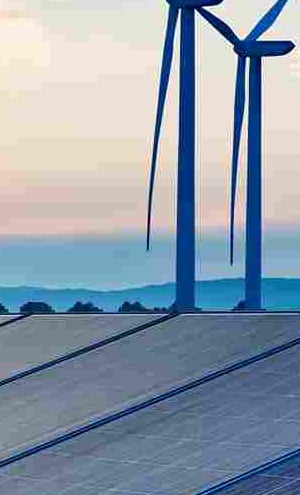
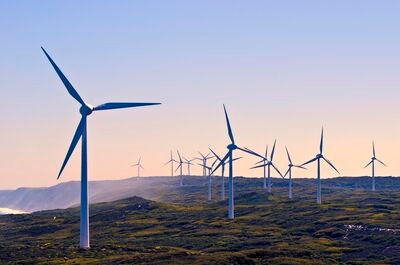
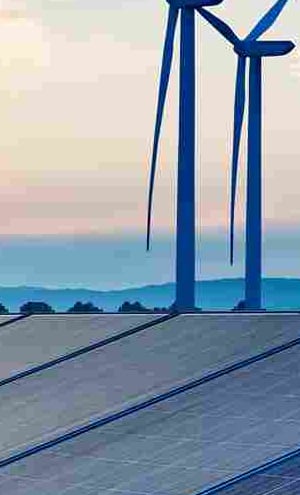
The clean energy transition is top of mind. Analysis by the International Energy Agency shows that offshore wind could power the entire world more than 18 times over. Other forms of ocean energy show promise too. Tidal and wave power, though still largely untapped, are close to reaching maturity, according to the International Renewable Energy Agency, and have the potential to be applied at global scale.
Sustainable fishing and aquaculture are also critical to protecting ocean health and marine biodiversity. Much like industrial agriculture, unsustainable practices are limiting the capacity of the sea to produce the healthy proteins on which more than three billion people depend. But through sustainable fishing and aquaculture, research has found, the ocean could provide over six times more food than it does today.
Shipping accounts for three per cent of global GHG emissions and around 90 per cent of all traded goods. Cleaner fuels, zero-emissions vessels and electrified ports will be needed to deliver on the sector’s current climate commitment of reducing GHG emissions by 70 per cent by 2050. According to research by the Getting to Zero Coalition, even halving the emissions from maritime shipping by 2050 would require investing up to $1.4trn, or $70bn a year, from 2030 onwards.
‘Blue tourism’ touches on all other sectors of the ocean economy, and accounts for 40 per cent of its export value. Tourism can be damaging to ocean habitats, but regenerative coastal tourism, which prioritises ocean health, can maintain the vitality of a region while protecting the long-term profitability of MPAs. This type of tourism also aims to support local seafood production, reduce waste flows and boost the overall local economy.
Ocean conservation is perhaps the most important “sector” of the blue economy, as it directly impacts the ability of ocean industries to function. In addition to the many benefits of healthy marine habitats, preventing plastic, fibre and chemical pollution is critical to improving both ocean and planetary health.
The investment case for the sustainable blue economy is obvious and the blueprint is emerging. As Dr Siân Rees, associate professor of social-ecological systems (research) at the University of Plymouth, expressed at our blue economy event:
“We know what we need to do. It’s good governance of ocean habitats. When nature recovers, we get clear economic and social benefits.” Dr Siân Rees.



.jpg?crop=300,495&format=webply&auto=webp)
_11zon.jpg?crop=300,495&format=webply&auto=webp)




_11zon.jpg?crop=300,495&format=webply&auto=webp)


.jpg?crop=300,495&format=webply&auto=webp)