Added Matter (5) - Basis from figures
The figures of an application form part of the application as filed and hence can be used as basis for amendments.
The figures of an application form part of the application as filed and hence can be used as basis for amendments, provided the requirements for direct and unambiguous basis are met. This test can be more challenging where the text does not describe the relevant features and so the only basis we have is in the figures.
A figure is considered to be a unitary disclosure and so in principle when relying on a figure for basis all features in that figure should be included in the claim. There is some leeway if elements of a figure are not technically related, or the Skilled Person would understand the disclosure is divisible, but this can be challenging.
Often figures used in patent applications are schematic in nature and this can limit the disclosure that can be taken from them. Schematic figures will often show the general arrangement of elements of a device, but may not show the actual physical shapes, construction, or connections which are often the features which are useful in a claim. To provide valid basis the figure must show the structure and function of the relevant features, supported as appropriate by the description and the reader’s common general knowledge.
A problem that often arises is whether the arrangement of elements in a figure is deliberate and intended to convey technical information, or the arrangement was simply used for a clear presentation of the figure. The latter may not provide basis as the arrangement does not convey technical information to the reader.
An example may help. The following figure was described as schematic in the text.
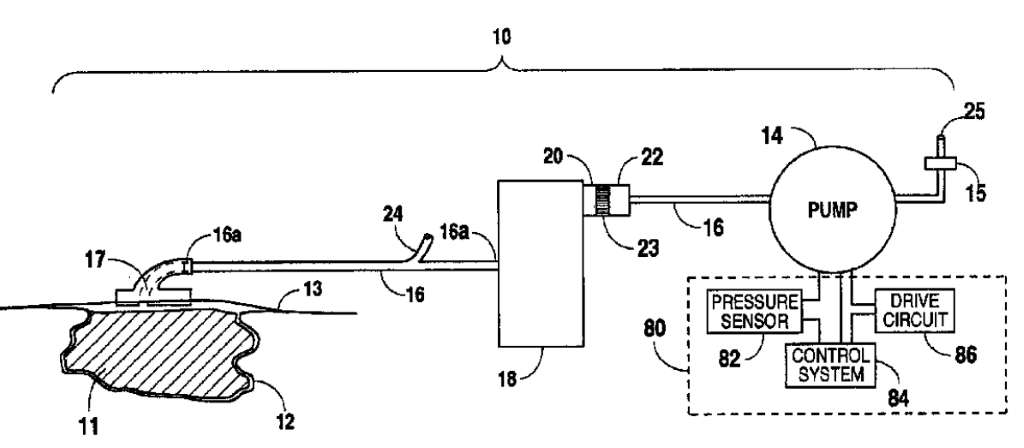
Element 18 represents a collection canister, and elements 20, 22, and 23 represent different types of filter. The EPO concluded that the figure does disclose the functional order of the three filters between the canister and the pump, but does not disclose that the filters are attached to each other. The reason for this is that the figure is schematic and shows the order of the filters, but the positioning of the filters next to each other does not imply they are joined. The figure only shows the functional relationship, not the physical relationship. The EPO found the filters could be held together in any appropriate way, which may not involve them being joined together.
The outcome may have been different if the figure had not been described as schematic as then it would have been easier to argue the figure did show physical relationships. Text describing the arrangement would have put this beyond doubt.
In general, dimensions and relative sizes cannot be taken from figures, but again there are always exceptions. For example, graphs included as figures have been allowed to provide basis for numerical values.
Finding basis for amendments in the figures is always difficult and open to significant risk. Every effort should be made to fully describe a figure, paying particular attention to aspects which may be not be considered disclosed by the figures; for example the physical relationship of elements in a schematic figure. Also, care should be taken to describe any optional features as optional to ensure the figure can help with basis in the absence of such optional features.
This article is a part of our EPO Practice and Peculiarities series. Click here to explore.



.jpg?crop=300,495&format=webply&auto=webp)









_11zon_11zon.jpg?crop=300,495&format=webply&auto=webp)