Every industry has a role to play in the transition to a sustainable global economy, but energy and natural resources companies carry more responsibility than most.
It is a role that many in the sector acknowledge. “There’s a deep sense of responsibility in this company,” says Kate Southwell, general counsel for corporate and commercial at global mining business Anglo American. “Sustainability is just the latest umbrella term for describing how we conduct our business.”
But the transition is also an abundant opportunity. According to our global research into business approaches to sustainability, executives in the energy and natural resources sector see the greatest opportunities in ‘attracting investment by making environmental commitments’, identified by 52% of business leaders, and ‘growing market share with sustainable products and services’ (51%).
For Anglo American, sustainability creates value through both the strategic evolution of its business and the efficiency and effectiveness of its operations. Among other things, a demonstrable commitment to sustainability is vital to its ability to access new mineral sources, particularly in copper, explains Southwell.
One of its sites under development is a crop-nutrients project in the UK that is accessed via a tunnel under a national park. “The only way we could get a permit was by innovating and putting together a very responsible Environmental Impact Assessment,” she says.
Transparency as a counter to greenwashing
The company is equally cautious in its approach to sustainability claims. “We’re really alive to the risks of greenwashing,” Southwell says.
Greenwashing rules have so far focused primarily on consumer-facing industries, but credible accusations of greenwashing would cause significant reputational harm to this sector.
Nearly half of our survey respondents (48%) from energy and natural resources companies say that clearer guidance on how to avoid greenwashing would help them pursue opportunities in sustainability.
While Anglo American produces the premium high-grade iron ore that will be used in the production of green steel, it does not market this or other products as being inherently ‘green’.
Instead, it provides the information its sustainability-conscious customers want, such as carbon emissions and provenance. Until there is an agreed standard for what constitutes a ‘sustainable’ material, “we just look to provide greater transparency”, Southwell says.
Reducing emissions in operations
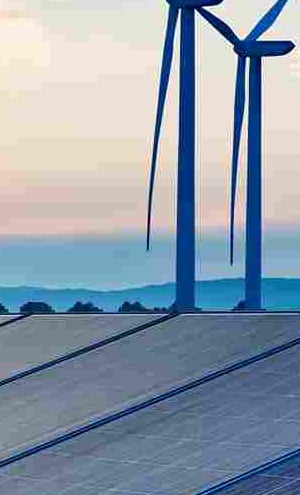
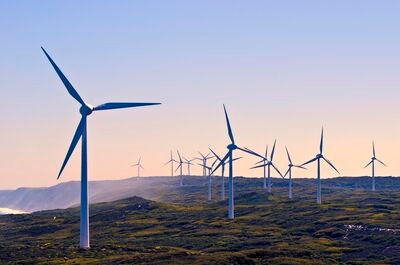
The transition to low-carbon energy is perhaps the sector’s greatest opportunity and this is prompting businesses to address their own energy supply. One in five energy and natural resources executives pick ‘renewable energy’ as the primary focus area of their internal investments in sustainability, more than in any other sector.
To decarbonise its operations in South Africa, Anglo American embarked on a joint venture with French energy utility EDF. No local suppliers offered the renewable energy it needed to meet its environmental obligations, so it invested in building the capacity itself.
“It means we’ll be able to transition our assets to renewable power and have the option to be a player in the renewable energy market in Africa more generally,” Southwell says.
Carbon offsets play a role in the company’s decarbonisation, but only after other options have been exhausted. “We will always try to reduce our footprint first before we use them,” says Southwell. “But for some assets, where it’s really hard to get operations to net zero, such as our metallurgical coal operations in Australia, we may use offsets in line with our global carbon management policies.”
To the dismay of many, the international community failed to reach an agreement on how voluntary carbon markets should function under the Paris Agreement at the UN’s COP28 conference last year. This leaves a lack of clarity over carbon trading rules, preventing companies in this sector to make greater use of carbon offsets, with 45% in our survey indicating a need for more regulatory guidance.
Taking responsibility for the value chain
Growing regulatory scrutiny obliges companies in all sectors to pay closer attention to the sustainability impact of their supply chains. In our survey, 55% of executives across all sectors say greater transparency throughout their value chain would be most useful in pursuing sustainability opportunities.
The products of the energy and natural resources industry are now the focus of regulators in Europe and beyond. “Our Scope 1 emissions are someone else's Scope 3 emissions, which is very much on our mind,” says Southwell.
Anglo American has ambitious plans here. “We are also working to decarbonise the entire iron ore value chain,” Southwell explains. This includes a partnership with H2 Green Steel, a Swedish company building the world’s first large-scale green steel production plant, to work together to advance low-carbon steelmaking processes.
Sitting at the strategy table
Anglo American has 90,000 employees and contractors but its legal team has fewer than 200. To get ahead of legal risks, including those related to sustainability, the team’s approach is to be as close to the business decision-making as possible.
“Rather than wait to be asked a question, we want to be at the table when a business unit is having a strategy discussion, so we can advise them to be mindful of certain risks and highlight potential opportunities,” says Southwell. “That means we don’t become ‘the department of no’, when someone’s decided to do something sustainability-related without considering a regulatory or reputation factor.”
This proximity to strategic decision-making ensures that acting responsibly does not jeopardise any opportunities. “I advise all our lawyers at the right level to sit with the executive team,” Southwell says. “That way, we become part of the decision-making team, not just an advisory capability.”




.jpg?crop=300,495&format=webply&auto=webp)
_11zon.jpg?crop=300,495&format=webply&auto=webp)



_11zon.jpg?crop=300,495&format=webply&auto=webp)

.jpg?crop=300,495&format=webply&auto=webp)