Handling sexual harassment complaints: the position in Asia
This article provides a summary of sexual harassment law in Asia’s major economic hubs and discusses potential legal issues frequently encountered.
Asia has not been immune from the impact of the Weinstein scandal, the #MeToo movement and publicised claims of harassment and abuse. It is expected that sexual harassment complaints will continue to become more common; many of these will, inevitably, refer to the workplace.
Sexual harassment complaints not only expose employers to potential legal claims, but also put reputation, employee relations and morale at stake. It is vital for employers to deal with complaints properly, and to be seen to do so.
Legal framework in Asia
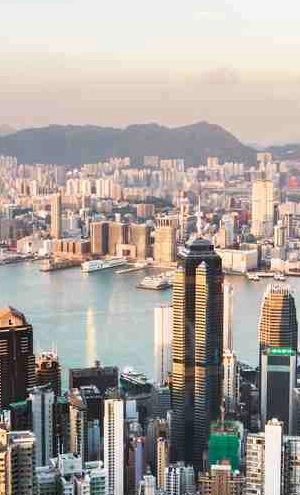
Development in this area of law in Asia has lagged behind that elsewhere. Where legal prohibitions exist (for example, in Hong Kong), the basic legal concepts overlap with the laws in Australia, the United States and the United Kingdom. In this note, we explore the legal positions in three of Asia’s major economic hubs: Hong Kong, Singapore and China.
In Hong Kong, sexual harassment is prohibited by the Sex Discrimination Ordinance (SDO), which applies to all employers in Hong Kong, subject to limited exceptions. Without taking ‘reasonably practicable steps’ to prevent its employees from committing sexual harassment, an employer may be held vicariously liable for the actions of employees in the course of employment, regardless of whether such actions are taken with the employer’s knowledge or approval. This should be a point of real concern for employers, particularly given that sexual harassment occurring outside normal business hours or outside the physical workplace will often be regarded as conduct in the course of employment. For example, employers may be liable for their employees’ conduct at an annual dinner or other work-related function, during business trips or at casual after-work events.
In contrast to Hong Kong, there is no legislation in Singapore which deals specifically with sexual harassment. The Protection from Harassment Act (POHA) governs all types of harassment and prohibits any action which causes “harassment, alarm or distress”. This is likely to include acts which would constitute sexual harassment for the purposes of laws in other jurisdictions. Under the POHA, however, the employer will not be liable even if its employee engages in sexual harassment, as the provisions in the POHA only impose sanctions on the direct perpetrator. In Singapore, workplace harassment, including sexual harassment, is nonetheless a topic that is on the mind of legislators. In a Committee of Supply debate this year, it was noted that an annual average of 20 reports to police involving alleged sexual harassment were made in each year between 2013 and 2017, and the Government expects employers to “intervene and take necessary actions to address employees concerns” against the prevention of harassment in the workplace.
In mainland China, there is a general prohibition on the sexual harassment of women under Article 40 of the PRC Law on Protection of Women’s Rights and Interests (LPWR) which has been in place since 2005. Similar to Singapore, the LPWR imposes liability on the perpetrator but there is no express basis for sanctions against the employer. Nevertheless, an employer in China can indirectly become liable for economic compensation in the form of severance, if a (female) employee resigns from her position as a result of sexual harassment and then claims that the employer has failed to provide appropriate or adequate working conditions or labour protection as required by the PRC Labour Contract Law.
Leaving aside the respective legislative positions, many multinational groups elect to have in place global policies dealing with harassment (and discrimination and retaliation). This is particularly the case where the group parent or headquarters are based in jurisdictions with developed relevant laws, such as Australia, the United States and the United Kingdom. While the policies may not always be expressed to be mandatory, it is common practice to expect employees to adhere. Notwithstanding the absence of any specific legislation which requires such policies or imposes sanctions on employers in Singapore and China, it is important to handle sexual harassment complaints carefully. Employers need to bear in mind that:
- employees may have the benefit of contractual, or quasi-contractual, protection arising from global policies, even in the absence of statutory coverage under the local laws, and
- employees may be transferred, seconded or travelling on business trips to and from jurisdictions which do recognise legal obligations relating to sexual harassment.
Furthermore, apart from statutory provisions, employers owe duties to employees to ensure compliance with express and implied contractual duties and other internal policies. Failure to handle sexual harassment complaints effectively or exposing an employee to harassment in the course of employment may amount to a fundamental breach of an implied duty of mutual trust and confidence (or failure to provide the required working conditions and protections, in the case of China); this may give rise to constructive dismissal and other claims. Reputational issues are also relevant and social media in particular is a powerful tool for aggrieved employees, or former employees, in this regard.
What is sexual harassment?
Take Hong Kong as an example, ‘sexual harassment’ is defined under the SDO as:
- any unwelcome sexual behaviour in circumstances where a reasonable person would have anticipated that the harassed person would be offended, humiliated or intimidated, or
- conduct of a sexual nature that creates a hostile and intimidating environment.
Women can be perpetrators as well as victims. Harassment does not need to take place between a man and a woman; “same sex” harassment is also outlawed.
Unlike in Hong Kong, there is no clear and uniform legal definition of ‘sexual harassment’ or ‘harassment’ in Singapore and China, under either the POHA or LPWR. Some examples of sexual harassment which are likely to be recognised and accepted as such in all jurisdictions include:
- touching, grabbing or deliberately brushing up against another person
- lewd gestures
- suggestions that sexual co-operation, or the toleration of sexual advances, may further a person’s career
- sexually derogatory or stereotypical remarks, and persistent questioning about a person’s romantic or sex life, and
- sexual jokes around the workplace, or displaying sexist or other sexually offensive pictures or posters.
Repeated behaviour is not essential; a single incident can constitute harassment. An ongoing course of conduct can be considered sexual harassment even if each element of the conduct would not constitute harassment when taken in isolation.
How to minimise potential exposure?
Minimisation of potential exposure on the part of the employer can be achieved by taking all reasonably practicable steps to prevent or tackle sexual harassment in the workplace. Such steps include:
- implementation of a written anti-harassment policy
- regular training on the policy
- ensuring that employees have sufficient knowledge and understanding of the policy
- ensuring that adequate complaint-raising channels and effective complaint-handling procedures are in place
- monitoring effectiveness of the policy
- taking specific steps to avoid trouble at “hot spots” (such as office parties), and
- imposing appropriate disciplinary sanctions against anyone found to be responsible for harassment, up to and including summary dismissal.
Complaint handling
Employers must also ensure that complaints are addressed in an impartial and prompt manner. An internal complaint-handling procedure provides employers with an opportunity to deal with complaints at the earliest opportunity and, in practice, this can often be effective in reducing the risk of a complainant resorting to external redress (such as initiating court proceedings).
The following sets out some brief practical guidance on conducting investigations into allegations of this nature:
- the investigator must be impartial and neutral (for example, he/she must not be related to the complainant or the accused and must have had no involvement in the matters under investigation)
- the investigator should emphasise the confidentiality of the matter and that the company will not tolerate retaliation against, or intimidation of, the complainant or anyone who participates in the investigation
- open questions that allow the interviewees to offer their version of events should be asked, and
- the investigation should not be limited to interviews; other potentially relevant documentary evidence such as email correspondence, instant messages and hard copy documents must be taken into account.
Common legal issues arising from an investigation
Suspension of an accused employee
Suspension of an employee should not be an automatic “knee-jerk” reaction to an allegation being raised. An employer should first consider factors such as the need to protect the complainant and the potential witnesses (particularly where the “accused” is senior), the possibility of evidence being destroyed, the principle that a person shall be innocent until proven guilty, the reputation of the accused and the need to maintain a good employer-employee relationship. If an employer does decide to suspend, it should carefully record the rationale and keep the suspension under review.
When an accused employee is suspended, employers must pay particular attention to internal and external communications when dealing with questions relating to the accused employee’s absence (to avoid a presumption of wrongdoing, or stigmatisation). A neutral approach is to inform that the employee is on leave, without disclosing any other information.
Personal data protection
Inevitably, some investigations will involve looking at personal data (such as email correspondence, instant messages, hard copy documents and CCTV). The Personal Data (Privacy) Ordinance (PDPO) in Hong Kong and Personal Data Protection Act 2012 (PDPA) in Singapore require data users to inform data subjects of various matters on or before the collection of personal data. This is typically done through a Personal Information Collection Statement (PICS). A well-drafted PICS will usually cover the use of personal data for investigation purposes. If such usage does not fall within the scope of the PICS, consent from the relevant employee is required. An investigated employee may refuse to co-operate.
Privileged communications
In relevant jurisdictions, care needs to be taken not to create unnecessarily non-privileged documents that may later be disclosable, whether in litigation, pursuant to a data access request or to government authorities. It is important to remember that disclosable material is likely to include records of interviews with employees, and could include emails, letters between management which had been intended to be confidential.
Whistleblower protection
There is no specific legislation protecting whistleblowers in Hong Kong, Singapore or China. In practice, many multinationals elect to adopt a global or regional whistleblower protection policy. In such cases, it will be important to establish whether the individual could be protected under the policy.
Potential financial exposure arising from failure to handle sexual harassment complaints effectively
To date, awards of damages made in Hong Kong have been comparatively modest; this is also the case in Singapore and China. A few examples of damages awarded by the court (for injury to feelings, punitive damages and/or loss of earnings) in higher profile sexual harassment cases, including in jurisdictions with an established history of harassment claims in court, are as follows:
United Kingdom
- Svetlana Lokhova v Sberbank CIB (2015) - £3,200,000
- Marks v Derbyshire Healthcare NHS Foundation Trust (2016) - £832,711
- BAE Systems (Operations ) Ltd v Maron Konczak (2017) - £360,179
Hong Kong
- L v Burton (2010) - HK$197,039
- B v King of the King Group Ltd (2012) - HK$76,000
- A v Chan (2011) - HK$60,000
Australia
- Matthews v Winslow Constructors (2015) - AU$1,360,027
- Trolan v WD Gelle Insurance and Finance Brokers Pty Ltd (2014) - AU$733,723
In light of the potential reputational damage arising from sexual harassment cases, employers, of course, frequently, opt for out of court settlements. Two Australian cases in the last decade involved publicised settlements where the claimant received approximately AU$6,000,000 and AU$850,000 respectively.
Financial exposure will be affected by the earnings of the victim; low income earners can expect to recover less than higher paid employees. The risk of a future multi-million dollar claim in an Asian jurisdiction, as seen elsewhere, cannot be ignored.
As already stated, quite apart from the financial impact, the non-financial repercussions (such as reputational damage, low morale and high turnover rate) must be taken into account.
Please contact any of the lawyers as mentioned below for further information.

.jpg?crop=300,495&format=webply&auto=webp)




_11zon.jpg?crop=300,495&format=webply&auto=webp)








_11zon.jpg?crop=300,495&format=webply&auto=webp)